Pour-Over Coffee Guide: Techniques That Improve Flavor
436 views
You've measured the beans. Heated the kettle. Followed a recipe you found online.
Yet somehow, the coffee still tastes flat. Or bitter. Sometimes both.
That's the frustrating part about pour-over brewing. Small changes—just a few degrees of water temperature or a slightly finer grind—can completely reshape the cup. Many people assume they need an expensive grinder or a premium dripper. They don't. Good technique consistently beats expensive equipment used poorly.
I've brewed excellent cups using a simple plastic dripper and a basic gooseneck kettle. I've also ruined premium Ethiopian coffee because I poured too aggressively and collapsed the filter. It happens.
The goal isn't perfection. It's understanding what each variable does so you can adjust intentionally instead of guessing.
Why Pour-Over Coffee Tastes Different
Unlike automatic drip machines, pour-over brewing gives you direct control over extraction. You're deciding how quickly water flows, how evenly the grounds become saturated, and how much flavor ends up in the cup.
That control matters because coffee contains hundreds of aromatic compounds. During brewing, acids dissolve first, followed by sweetness, then bitterness if extraction continues too long. The trick is finding the balance.
Research published by the Specialty Coffee Association (SCA) and brewing guidance derived from the Coffee Brewing Control Chart generally target:
Brewing Parameter | Recommended Range |
|---|---|
Water temperature | 90–96°C (195–205°F) |
Brew ratio | 1:15 to 1:17 |
Extraction yield | 18–22% |
Total dissolved solids (TDS) | 1.15–1.45% |
Those aren't strict rules. Think of them as reliable starting points.
Start With Better Beans, Not Better Gear
Fresh coffee changes everything.
Beans roasted within the past two to six weeks generally retain more aromatic compounds than coffee that's been sitting on a supermarket shelf for several months.
Check the roast date instead of the expiration date.
Medium-light roasts usually highlight fruit, florals, and acidity. Darker roasts lean toward chocolate, caramel, and roasted sugars.
Storage matters too.
Avoid transparent containers sitting beside the stove. Heat, oxygen, moisture, and light all speed up staling. An airtight container kept in a cool cupboard works surprisingly well.
The Grinder Makes a Bigger Difference Than the Dripper
People often spend $300 on a beautiful kettle while using a cheap blade grinder.
That's backwards.
Blade grinders chop randomly. Some particles become powder while others remain chunky. The result? Simultaneous over-extraction and under-extraction.
Burr grinders produce much more consistent particle sizes.
Popular manual and electric options include:
Baratza Encore ESP
Fellow Ode Gen 2
Timemore Chestnut C3
1Zpresso J Series
Comandante C40 MK4
Each grinder has its own adjustment scale, so there's no universal "click 18" recommendation. Grind settings aren't standardized across manufacturers.
A practical starting point looks something like coarse table salt.
Then adjust based on taste.
Water Isn't Just Water
Coffee is roughly 98% water.
Ignore it, and every other upgrade becomes less effective.
Many municipal water supplies contain chlorine or excessive mineral content. Extremely soft water can make coffee taste hollow, while very hard water often mutes delicate flavors.
The SCA recommends brewing water around:
Total hardness: approximately 50–175 ppm
Alkalinity: roughly 40 ppm
Neutral pH near 7
Many home brewers use filtered water from systems such as Brita, ZeroWater (with remineralization), or specialty mineral packets like Third Wave Water added to distilled water.
Simple change. Noticeable difference.
Choosing the Right Pour-Over Brewer
Different brewers encourage different extraction styles.
Brewer | Filter Style | Flavor Profile |
|---|---|---|
Hario V60 | Cone | Bright, complex, clean |
Kalita Wave 185 | Flat bottom | Balanced, forgiving |
Origami Dripper | Cone or Wave | Flexible depending on filter |
Chemex | Thick paper | Very clean, light body |
April Brewer | Flat bottom | Even extraction, sweetness-focused |
None is objectively "best."
The V60 rewards precision but also exposes mistakes quickly. The Kalita Wave tends to produce consistent cups even if your pouring isn't perfect.
A Simple Recipe That Actually Works
Here's a reliable starting point.
Coffee: 20 grams
Water: 320 grams
Ratio: 1:16
Water temperature: 94°C
Grind: Medium
Step 1: Rinse the filter
Paper filters carry subtle papery flavors.
Rinse thoroughly with hot water, then discard the rinse water before brewing.
Step 2: Bloom
Pour around 40 grams of water over the grounds.
Wait 30–45 seconds.
Fresh coffee releases carbon dioxide during this stage. Skipping the bloom often creates uneven extraction because trapped gas prevents water from reaching every particle.
Step 3: Main pours
Rather than dumping all the water at once, add it gradually.
Many brewers prefer two or three controlled pours while maintaining a relatively stable water level.
Slow. Steady.
Avoid pouring directly onto the paper filter.
Step 4: Finish
Most brews finish between 2:45 and 3:30 depending on the brewer, grind size, and coffee.
A drawdown exceeding four minutes often signals an overly fine grind or clogged filter.
Pouring Technique Changes More Than People Expect
You don't need perfect circles worthy of a latte competition.
Consistency matters more.
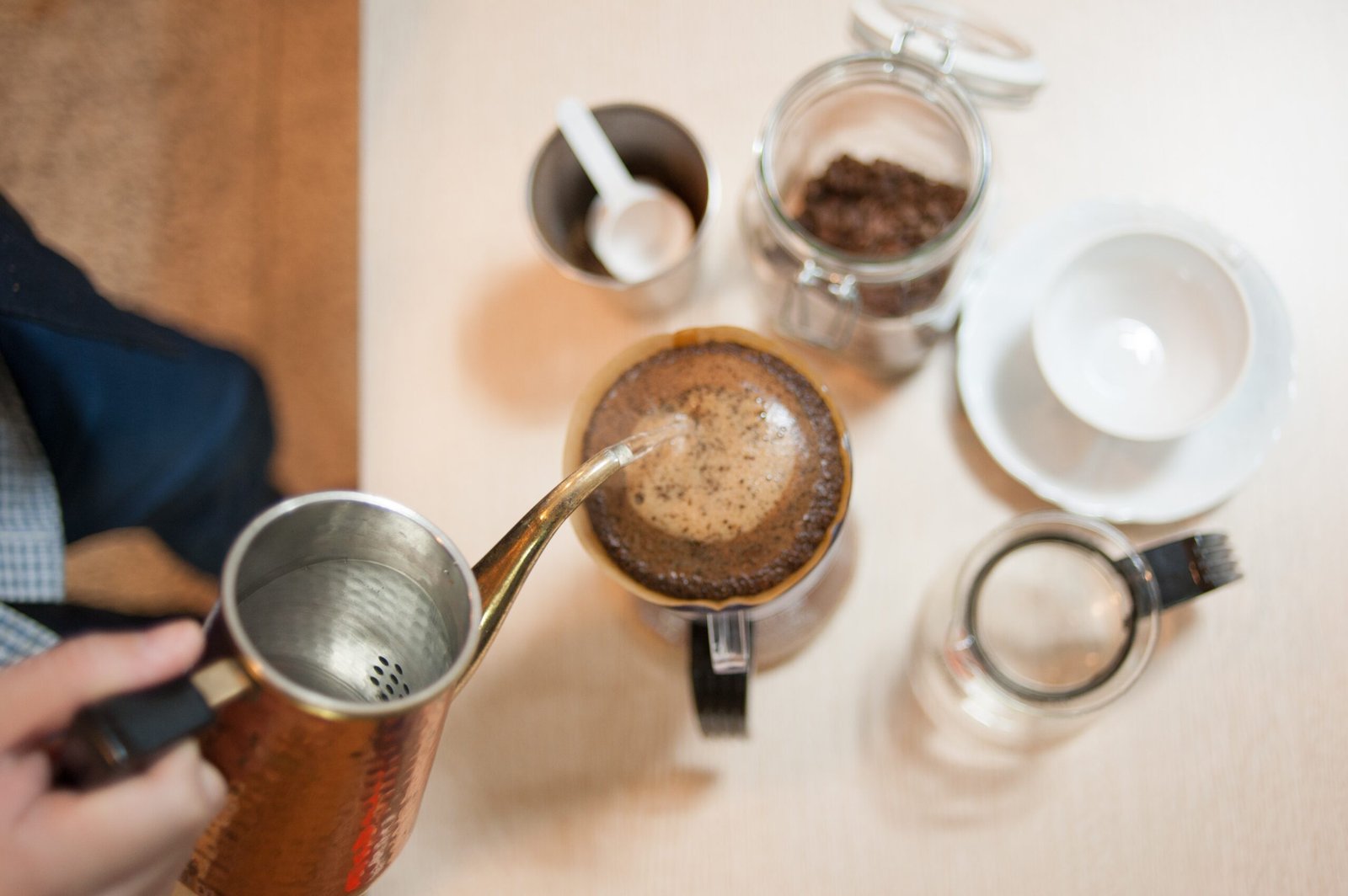
A gooseneck kettle helps because it provides controlled flow instead of unpredictable splashing.
Keep the kettle fairly low over the coffee bed.
Large drops striking from high above disturb the bed, creating channels where water rushes through instead of extracting evenly.
One mistake shows up constantly.
People pour faster near the end simply because they're eager to finish. Extraction becomes uneven almost immediately.
Reading the Coffee Instead of the Recipe
Recipes are starting points.
Your taste buds decide the final adjustment.
Taste | Likely Cause | Try This |
|---|---|---|
Sour | Under-extracted | Grind finer or brew hotter |
Bitter | Over-extracted | Grind coarser or shorten brew |
Weak | Too little coffee | Increase dose |
Harsh | Uneven extraction | Improve pouring consistency |
Hollow | Water quality issue | Try filtered or remineralized water |
Don't change three variables simultaneously.
Change one.
Taste again.
Repeat.
That's how experienced brewers dial in coffee.
Small Details Most Guides Skip
Tiny habits often create surprisingly large improvements.
One example: gently swirling the brewer after the final pour.
This helps level the coffee bed and reduces dry pockets without aggressive stirring.
Another overlooked detail involves filter placement. Some cone filters fold unevenly after rinsing, leaving tiny gaps along the seam. Water can bypass the coffee entirely.
Watch for that.
Freshly roasted coffee also behaves differently from older beans.
A coffee roasted three days ago produces a much larger bloom than one roasted four weeks ago because it still contains significantly more trapped carbon dioxide.
That's normal.
Digital Scales Beat Guesswork
Eyeballing coffee works...until it doesn't.
A scale with 0.1-gram resolution removes one of the biggest variables.
Popular brewing scales include:
Timemore Black Mirror Basic 2
Hario V60 Drip Scale
Acaia Pearl S
Felicita Arc
Most modern scales include integrated timers, making it easier to maintain consistent pouring schedules without juggling a separate stopwatch.
Common Mistakes Beginners Make
Not every disappointing cup comes from bad coffee.
Sometimes it's surprisingly simple.
Grinding immediately after cleaning without recalibrating the burrs.
Using boiling water straight from the kettle every single time.
Pouring directly against the paper filter.
Ignoring brew time entirely.
Changing coffee, grinder, water, recipe, and temperature all at once.
That last one happens more often than people admit.
If every variable changes, you'll never know what actually improved—or ruined—the cup.
Does Expensive Equipment Matter?
Yes.
Eventually.
A precision kettle with stable temperature control, such as the Fellow Stagg EKG Pro or Brewista Artisan, offers finer control than a basic stovetop kettle. High-end grinders also reduce fines and improve consistency.
Still, those upgrades provide diminishing returns.
A plastic Hario V60 paired with fresh beans, filtered water, a decent burr grinder, and careful pouring routinely outperforms expensive equipment used carelessly.
Technique earns the biggest gains first.
Frequently Asked Questions
How hot should water be for pour-over coffee?
Aim for 90–96°C (195–205°F). Light roasts generally benefit from the upper end of that range, while darker roasts often taste smoother with slightly cooler water.
Why does my pour-over taste sour?
Sour coffee usually indicates under-extraction. Try grinding finer, increasing water temperature slightly, or extending contact time.
Can I brew good pour-over without a gooseneck kettle?
Yes. A gooseneck simply improves flow control. Careful pouring from a regular kettle can still produce excellent coffee, although consistency becomes more difficult.
Is freshly roasted coffee always better?
Usually, but not immediately after roasting. Many specialty coffees taste best after resting for roughly 5–14 days, allowing excess carbon dioxide to escape while preserving aroma.
Should I stir the coffee bed?
A gentle stir during the bloom or a light swirl after the final pour can improve extraction. Excessive stirring risks over-agitation and uneven drawdown.
Keep Tweaking, One Cup at a Time
The best pour-over recipe isn't hidden inside a championship routine or an expensive gadget. It's built through repetition, careful observation, and tiny adjustments that accumulate over time.
Pick one coffee. Brew it several times using the same recipe. Change only a single variable—perhaps the grind, perhaps the water temperature—and pay attention to what actually changes in the cup. Before long, you'll spend less time chasing recipes online and more time brewing coffee that consistently tastes the way you want.
pour-over coffee
coffee brewing guide
pour-over techniques
better coffee flavor
manual coffee brewing
coffee brewing tips
pour-over method
specialty coffee
coffee extraction
home barista guide
Found this helpful? Share it!