
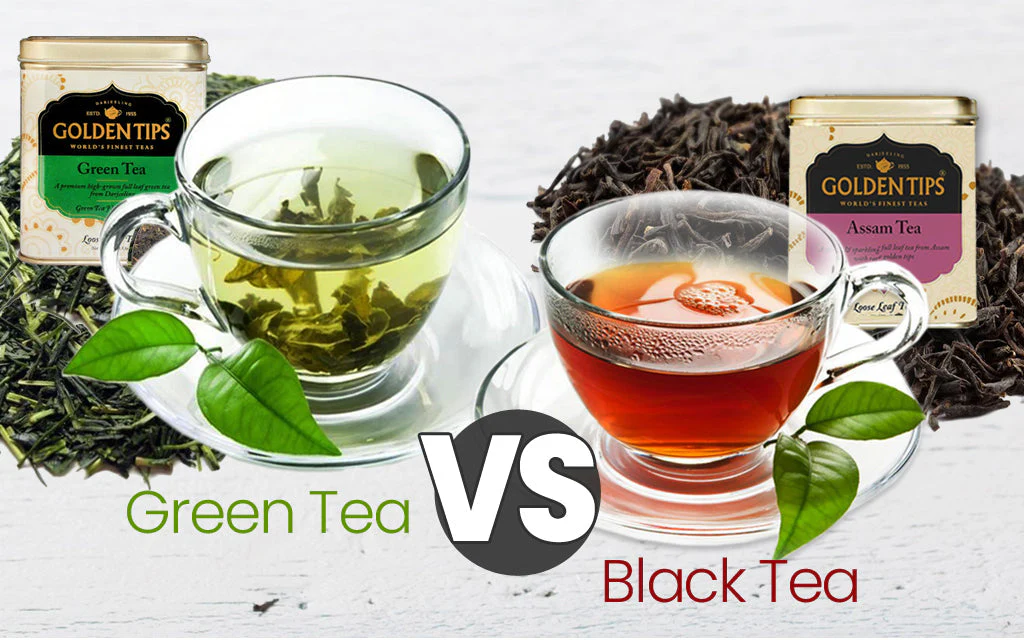
Green Tea vs Black Tea Health Benefits Compared
506 views
Standing in the tea aisle sounds simple—until you're staring at rows of green tea, black tea, breakfast blends, matcha, Darjeeling, Assam, and Earl Grey. Most people eventually ask the same question: Which one is actually healthier?
The answer isn't as tidy as social media headlines suggest.
I've seen people switch entirely to green tea expecting dramatic weight loss, while others avoid black tea because they believe it's "too processed." Neither assumption holds up very well. Both teas come from the exact same plant—Camellia sinensis. The difference begins after the leaves are picked, where oxidation changes their chemistry, flavor, caffeine level, and even some of their health effects.
That's where the comparison becomes interesting.
Same Plant, Different Journey
Green tea and black tea start life as identical leaves.
What happens next changes everything.
Green tea is heated—usually by steaming in Japan or pan-firing in China—almost immediately after harvesting. This rapid heating prevents oxidation, helping preserve high concentrations of catechins, especially epigallocatechin gallate (EGCG), one of the most researched plant compounds in nutrition.
Black tea follows another path. The leaves are rolled, exposed to oxygen, and fully oxidized before drying. During oxidation, many catechins transform into larger antioxidant compounds called theaflavins and thearubigins.
Neither process makes the tea "better." It simply creates two beverages with different chemical profiles.
Researchers from organizations including the World Health Organization (WHO), Harvard T.H. Chan School of Public Health, and the U.S. National Institutes of Health consistently describe both green and black tea as rich sources of beneficial polyphenols, although their dominant antioxidants differ.
The Biggest Health Benefits Side by Side
Health Area | Green Tea | Black Tea |
|---|---|---|
Main antioxidants | EGCG and catechins | Theaflavins and thearubigins |
Typical caffeine (240 ml cup) | 20–45 mg | 40–70 mg |
Oxidation level | Minimal | Full |
Flavor | Fresh, grassy, vegetal | Rich, malty, robust |
Best for | Mild stimulation, antioxidant intake | Stronger alertness, hearty flavor |
Common brewing temperature | 70–85°C | 90–100°C |
The caffeine figures aren't fixed. A delicate Japanese sencha brewed for one minute can contain much less caffeine than an aggressively steeped English Breakfast tea.
Even the same tea behaves differently depending on brewing time.
Heart Health: Surprisingly Close
Many people assume green tea wins easily.
Not quite.
Large observational studies suggest that people who regularly drink either green or black tea tend to have a lower risk of cardiovascular disease compared with non-tea drinkers. Scientists believe several mechanisms contribute:
Improved endothelial function
Better blood vessel flexibility
Reduced oxidative stress
Mild improvements in cholesterol metabolism
Green tea's EGCG has attracted enormous scientific attention because laboratory research shows strong antioxidant activity.
Black tea, meanwhile, produces theaflavins during oxidation. These compounds also demonstrate antioxidant and anti-inflammatory properties, and several clinical studies suggest modest improvements in LDL cholesterol markers.
Neither tea replaces medication.
Neither magically prevents heart disease.
They simply fit well within an overall healthy eating pattern.
Energy and Mental Focus
Here's where everyday experience usually matches the science.
Black tea generally delivers a stronger morning lift.
Most cups contain roughly twice the caffeine of green tea, although preparation methods can narrow that gap. If you've ever switched from coffee to tea, black tea often feels like a smoother transition because the caffeine boost is noticeable without being overwhelming.
Something else happens too.
Tea naturally contains L-theanine, an amino acid associated with calm attention. Researchers believe the combination of caffeine and L-theanine may support sustained concentration while reducing the jitteriness some coffee drinkers experience.
I've seen people make one small mistake repeatedly: steeping green tea for five or six minutes because they assume longer brewing equals healthier tea. Instead, the drink becomes bitter, and caffeine extraction increases more than expected.
Two to three minutes is usually enough for many green teas.
Weight Management: Ignore the Hype
Marketing has inflated expectations for green tea.
Yes, green tea extracts containing concentrated EGCG have been investigated for their potential effects on fat oxidation and metabolism. Some studies report modest benefits.
Keyword: modest.
Drinking two or three cups of green tea won't suddenly melt body fat.
Black tea hasn't received the same level of attention for weight loss, but emerging research suggests its polyphenols may also influence gut bacteria and energy metabolism in ways scientists continue exploring.
The real advantage is much simpler.
Replacing sugary drinks with unsweetened tea reduces daily calorie intake without much effort.
That change matters more than chasing "fat-burning" claims.
Gut Health Is Becoming a Bigger Story
Scientists have shifted considerable attention toward the gut microbiome during the past decade.
Tea keeps appearing in that research.
Green tea catechins and black tea polyphenols both interact with intestinal bacteria, although they do so differently because oxidation changes the compounds available for digestion.
Some studies suggest:
Green tea may encourage beneficial bacterial diversity.
Black tea polyphenols appear capable of producing helpful microbial metabolites.
Both beverages may contribute to a healthier intestinal environment when consumed regularly.
This area is still evolving. Human microbiome research remains complex, and scientists continue investigating exactly how tea influences different bacterial populations.
Which Tea Has More Antioxidants?
That depends on what you mean by "more."
Green tea contains higher concentrations of intact catechins because oxidation is prevented during processing.
Black tea loses many catechins during oxidation—but those compounds don't simply disappear. They transform into larger antioxidant molecules.
Think of it less like one tea losing benefits and more like the chemistry taking a different route.
The antioxidant profile changes.
The health potential remains impressive.
Sleep, Anxiety, and Caffeine Sensitivity
Some people can drink black tea after dinner without blinking.
Others lie awake until 2 a.m.
Individual caffeine sensitivity varies dramatically due to genetics, age, medications, liver metabolism, and even habitual caffeine intake.
If sleep quality matters, timing matters just as much.
A practical approach looks something like this:
Drink black tea earlier in the day.
Switch to green tea during the afternoon if you still want caffeine.
Choose naturally caffeine-free herbal teas in the evening if sleep is a priority.
Remember that "decaffeinated" doesn't necessarily mean caffeine-free. Most decaf teas still contain small residual amounts.
Brewing Mistakes That Affect Health Benefits
Tiny mistakes can noticeably change flavor.
Sometimes they reduce the pleasant drinking experience enough that people simply stop drinking tea altogether.
A few examples:
Using boiling water for delicate green tea.
Leaves become overly bitter because excessive heat extracts tannins rapidly.
Brewing black tea too briefly.
The flavor tastes weak and flat, leaving many people adding extra sugar or milk to compensate.
Poor storage.
Tea absorbs moisture and odors surprisingly easily. Leaving an opened box near spices or above a humid kettle gradually damages flavor and aroma.
Store tea in an airtight container away from heat, light, and moisture.
Simple habits.
Worth it.
Does Milk Change the Benefits?
The debate never really ends.
Some laboratory studies have suggested milk proteins may bind to certain tea polyphenols, potentially influencing antioxidant activity.
Human studies, however, haven't reached a consistent conclusion.
Adding a small amount of milk to black tea doesn't suddenly eliminate its health benefits. If milk helps you enjoy tea without excessive sugar, it's a perfectly reasonable choice.
Sugar deserves more attention than milk.
Large amounts of added sugar quickly offset many of the nutritional advantages of drinking tea regularly.
Green Tea vs Black Tea: Which One Fits Your Lifestyle?
Different routines call for different choices.
If you want... | Better choice |
|---|---|
Lower caffeine | Green tea |
Stronger morning energy | Black tea |
Mild, fresh taste | Green tea |
Bold flavor with milk | Black tea |
Traditional afternoon tea | Black tea |
Delicate sipping without additives | Green tea |
Many long-term tea drinkers eventually stop treating it as a competition.
They simply enjoy both.
Green tea during the afternoon.
Black tea with breakfast.
Problem solved.
Practical FAQs
Is green tea healthier than black tea?
Not universally. Green tea contains more catechins like EGCG, while black tea provides theaflavins formed during oxidation. Both have strong evidence supporting cardiovascular and overall health benefits.
Which tea contains more caffeine?
Most black teas contain approximately 40–70 mg of caffeine per 240 ml cup, while green tea usually ranges from 20–45 mg, although brewing method and leaf variety can change those numbers.
Can I drink tea every day?
For most healthy adults, daily consumption of unsweetened green or black tea is considered safe as part of a balanced diet. People sensitive to caffeine, pregnant individuals, or those taking certain medications should follow medical guidance regarding caffeine intake.
Does green tea really boost metabolism?
Research suggests green tea may produce a small increase in energy expenditure and fat oxidation, but the effect is generally modest. Sustainable diet and exercise habits remain far more influential for long-term weight management.
Which tea is better before exercise?
Many people prefer black tea before workouts because of its higher caffeine content. Green tea offers a gentler caffeine boost that may suit individuals who are more sensitive to stimulants.
The Better Choice Might Be Drinking Tea Consistently
Looking for a single winner misses the point.
Green tea shines with its fresh profile and high catechin content. Black tea offers richer flavor, slightly more caffeine, and its own unique antioxidant compounds developed during oxidation. Both have substantial scientific support behind them, especially for heart health and overall dietary quality.
Rather than forcing yourself to drink the tea someone else calls "best," pick the one you'll actually enjoy tomorrow, next week, and six months from now. Consistency usually beats chasing the latest health trend—and your teacup is a much better place to start than another expensive supplement.
green tea benefits
black tea benefits
green tea vs black tea
tea health benefits
antioxidant tea
healthy tea choices
green tea antioxidants
black tea caffeine
best tea for health
tea comparison
Found this helpful? Share it!