
Affordable Coffee Grinders Worth Buying in 2026
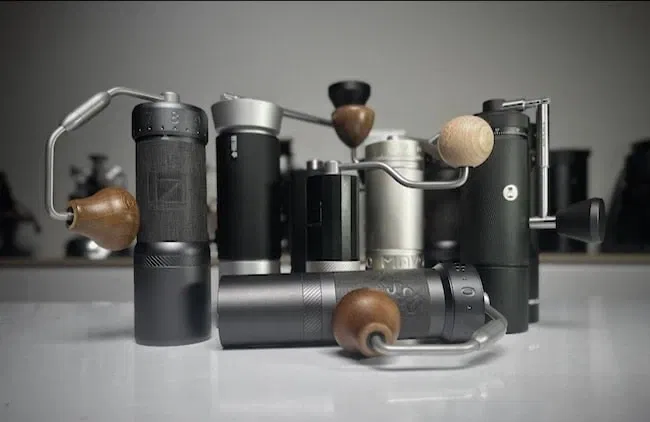
536 views
A bad grinder can ruin excellent coffee in less than ten seconds.
That's the frustrating part. People spend $20 on premium beans, measure everything carefully, heat filtered water to the right temperature, and then run those beans through an inconsistent blade grinder that produces powder, pebbles, and everything in between. The result? Bitter espresso, weak pour-over, and French press cups full of sludge.
I've made that mistake. More than once.
The good news is that affordable coffee grinders have improved dramatically over the past few years. Burr grinders that once cost well over $200 are now available for under $100, while manual grinders deliver surprisingly consistent results for travelers and home brewers alike.
If you're shopping in 2026, these are the budget-friendly coffee grinders actually worth your money.
Why your grinder matters more than your coffee maker
People often upgrade their brewer first.
That's backwards.
Coffee extraction depends heavily on particle consistency. A grinder that produces evenly sized grounds allows water to extract flavor at roughly the same rate from every particle. Mixed particle sizes create two problems simultaneously:
Fine particles over-extract and become bitter.
Large chunks under-extract and taste sour.
This isn't marketing hype. Organizations like the Specialty Coffee Association (SCA) and decades of coffee research consistently emphasize grind consistency as one of the biggest variables affecting cup quality.
Even an inexpensive drip machine paired with a quality burr grinder often produces better coffee than an expensive brewer using poorly ground beans.
Blade grinder or burr grinder?
Here's the quick answer.
Buy a burr grinder if your budget allows.
Type | Typical Price | Grind Consistency | Best For |
|---|---|---|---|
Blade grinder | $15–35 | Poor | Occasional coffee drinkers |
Manual burr grinder | $35–90 | Very good | Pour-over, AeroPress, travel |
Electric burr grinder | $70–150 | Excellent | Daily home brewing |
Blade grinders use spinning blades similar to miniature blenders.
Burr grinders crush beans between two precisely machined surfaces. The difference in cup quality is obvious after just a few brews.
Best affordable coffee grinders in 2026
Baratza Encore ESP
Approximate price: $150–170
The Encore has earned a reputation over many years for good reason. The newer Encore ESP improves espresso capability while still handling drip coffee, Chemex, AeroPress, and French press without difficulty.
Key specifications:
40 mm hardened steel conical burrs
Fine adjustment optimized for espresso
Simple on/off operation
Easy burr replacement
Widely available replacement parts
One detail many buyers overlook is repairability.
Unlike many inexpensive grinders that become disposable once a gear fails, Baratza continues to sell replacement burrs, gearboxes, hoppers, and switches. That's a significant advantage if you expect your grinder to last five or ten years.
The downside? It's a little louder than premium grinders and doesn't include timed dosing.
OXO Brew Conical Burr Grinder
Approximate price: $90–110
This remains one of the easiest recommendations for first-time coffee enthusiasts.
It offers:
15 primary grind settings
Multiple micro-adjustments
Stainless steel conical burrs
UV-resistant bean hopper
One-touch timer
The timer is surprisingly accurate for everyday brewing.
During regular use, static electricity occasionally causes fine grounds to cling inside the collection container, especially during dry winter months. A light mist of water on the beans—the Ross Droplet Technique (RDT)—helps reduce static considerably.
Fellow Opus
Approximate price: $175–195
Technically it sits near the upper edge of "budget," but frequent sales often push it below $170.
The Opus targets users who want one grinder for nearly every brewing method.
Strengths include:
Espresso-capable adjustment range
Anti-static technology
Quiet motor
Compact footprint
The adjustment system isn't immediately intuitive because macro and micro settings work together. Expect a few trial brews before finding your ideal espresso grind.
After that, it's impressively consistent.
Timemore Chestnut C3
Approximate price: $50–80
Not everyone wants another appliance taking up kitchen space.
Manual grinders have become remarkably capable, and the Chestnut C3 proves that point.
Specifications include:
CNC-machined stainless steel burrs
Aluminum alloy body
Dual bearing stabilization
Approximately 25–30 g bean capacity
Grinding enough coffee for a single pour-over usually takes around 30–45 seconds.
Grinding for espresso? Longer. Your arms will notice.
Still, the consistency competes with many electric grinders costing twice as much.
KINGrinder P2
Approximate price: $45–65
This grinder has quietly become one of the best values available.
Its steel burr geometry produces surprisingly uniform particles for manual brewing, while the adjustment mechanism offers enough precision for AeroPress, V60, French press, and even entry-level espresso machines.
Travelers especially appreciate its compact size.
Throw it into a backpack alongside an AeroPress Go, and you're ready almost anywhere.
Capresso Infinity Plus
Approximate price: $85–110
This model has been around for years.
Sometimes that's a good thing.
Rather than chasing smartphone connectivity or unnecessary displays, Capresso focused on reliability.
Features include:
Commercial-grade conical burrs
Multiple grind categories
Slow-speed motor to reduce heat buildup
Bean hopper around 11 ounces (roughly 310 grams)
Heat matters more than many people realize. Excessive friction can slightly alter coffee aromatics before brewing begins. Slower burr speeds help minimize that effect.
Which grinder fits your brewing style?
Different brewing methods need different grind sizes.
Brewing Method | Recommended Grinder |
|---|---|
Espresso | Baratza Encore ESP, Fellow Opus |
Pour-over | Timemore C3, OXO Brew |
French Press | Capresso Infinity, OXO Brew |
AeroPress | KINGrinder P2, Timemore C3 |
Cold Brew | OXO Brew, Capresso Infinity |
Buying a grinder optimized for your preferred brewing method usually delivers better results than chasing dozens of adjustment settings you'll never use.
Features actually worth paying for
Some upgrades sound impressive but add little value.
Others genuinely improve daily use.
Worth paying for:
Stainless steel burrs instead of ceramic in most electric grinders
Easily removable burrs for cleaning
Replaceable parts
Low grind retention
Static reduction features
Less important for most buyers:
Bluetooth connectivity
Touchscreen controls
Built-in brewing scales
Smartphone apps
RGB lighting (yes, a few grinders actually have it)
Coffee doesn't care about your Wi-Fi connection.
Cleaning makes a bigger difference than most people expect
Old coffee oils become rancid.
Not immediately. Eventually.
After several weeks, those oils begin coating burrs and internal surfaces, dulling fresh coffee flavors.
A simple routine works well:
Brush loose grounds every week.
Deep-clean burrs every one to two months.
Avoid washing steel burrs with water unless the manufacturer explicitly recommends it.
Grinder cleaning tablets, such as Grindz, are useful occasionally, but manual cleaning still removes stubborn residue more effectively.
Common buying mistakes
People rarely regret buying a slightly better grinder.
They often regret buying the cheapest one available.
I've seen these mistakes repeatedly:
Choosing blade grinders simply because they're cheaper.
Buying espresso-focused grinders for French press only.
Ignoring replacement part availability.
Filling bean hoppers with weeks of coffee instead of storing beans in airtight containers.
Expecting factory grind settings to match every coffee bean.
Beans vary.
A light-roasted Ethiopian coffee often needs a different setting than a medium-roasted Colombian, even on the same machine.
Tiny adjustments matter.
FAQs
Is a manual coffee grinder better than a cheap electric grinder?
In many cases, yes. A quality manual burr grinder around $60 often delivers better grind consistency than an inexpensive electric blade grinder.
How much should I spend on a good coffee grinder?
Around $80–150 is currently the sweet spot. That budget buys reliable burr grinders suitable for daily home brewing without entering premium territory.
Can affordable grinders make espresso?
Some can. Models like the Baratza Encore ESP and Fellow Opus are specifically designed with fine enough adjustment ranges for espresso machines.
How long do burr grinders typically last?
With regular cleaning, quality burr grinders often remain in service for five to ten years or longer. Many manufacturers also sell replacement burrs, extending their lifespan.
Should I keep coffee beans inside the grinder hopper?
Only enough for a few days if possible. Beans stay fresher in airtight containers stored away from heat, moisture, and direct sunlight.
Final thoughts
Coffee gear doesn't have to empty your wallet.
A dependable burr grinder changes your daily cup far more than most expensive brewers ever will. Pick a grinder that matches how you actually make coffee—not how you imagine you'll brew six months from now—learn its adjustment range, clean it regularly, and make small grind changes whenever you switch beans. Those small habits pay off every single morning.
affordable coffee grinders 2026
best budget coffee grinder
cheap coffee grinders
burr coffee grinder
coffee grinder for home
espresso grinder budget
manual coffee grinder
electric coffee grinder
best coffee grinder 2026
coffee brewing tools
Found this helpful? Share it!