
Can Brewing Waste Become Renewable Energy?
80 views
Every batch of beer leaves something behind. After the brewing process is complete, breweries are left with spent grain, surplus yeast, hops, wastewater, and other organic by-products. For many years, much of this material was treated simply as waste. Today, it's increasingly viewed as a valuable resource that can generate renewable energy while reducing environmental impacts.
From small craft breweries to large commercial operations, interest in turning brewing waste into clean energy continues to grow. This article explains how the process works, which types of brewing waste have the greatest energy potential, the benefits and challenges involved, and why many experts see brewery by-products as part of a more circular, sustainable brewing industry.
What Is Brewing Waste?
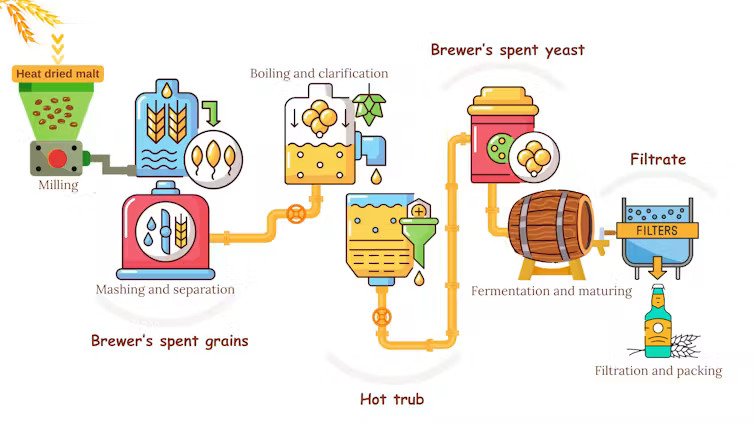
Brewing waste includes the organic materials left after producing beer. Most of these materials contain carbohydrates, proteins, fibers, and other compounds that microorganisms can naturally break down.
Common types of brewing waste include:
Brewer's spent grain (BSG), the largest by-product by volume
Spent yeast
Spent hops and trub
Surplus or expired beer
High-strength brewery wastewater rich in organic matter
While many breweries already send spent grain to livestock farms as animal feed, not every brewery has nearby agricultural partners or enough demand. In those cases, alternative uses become increasingly important.
Can Brewing Waste Really Become Renewable Energy?
Yes. Brewing waste can be converted into renewable energy through anaerobic digestion, a biological process in which naturally occurring microorganisms break down organic material without oxygen.
During digestion, microorganisms produce:
Biogas, which primarily contains methane and carbon dioxide
Digestate, a nutrient-rich material that can be used as a soil amendment after appropriate treatment
The U.S. Environmental Protection Agency identifies brewery waste as a suitable feedstock for anaerobic digestion, alongside food waste, agricultural residues, and wastewater solids. The resulting biogas can generate electricity, provide heat, or be upgraded into renewable natural gas for broader energy use.
Which Brewing By-Products Produce Energy?
Not every brewery by-product performs the same way in an energy recovery system.
Brewing by-product | Renewable energy potential | Common current use |
|---|---|---|
Brewer's spent grain | High | Animal feed, anaerobic digestion |
Spent yeast | High | Anaerobic digestion, feed ingredients |
Brewery wastewater | High | Wastewater treatment with biogas recovery |
Spent hops and trub | Moderate | Composting, anaerobic digestion |
Surplus beer | High | Anaerobic digestion |
Many anaerobic digestion facilities process several organic materials together, a practice known as co-digestion. Mixing brewery waste with food waste or agricultural manure often improves system performance and increases overall biogas production.
How Anaerobic Digestion Works
The basic process is surprisingly straightforward.
1. Waste collection
Organic brewery by-products are separated from non-organic materials like packaging and cleaning chemicals.
2. Feeding the digester
The organic waste enters a sealed tank where oxygen is absent.
3. Microbial breakdown
Naturally occurring bacteria digest the organic matter over several weeks, gradually producing methane-rich biogas.
4. Energy recovery
The captured biogas can be used to:
Generate electricity
Produce steam for brewing operations
Heat buildings
Fuel combined heat and power (CHP) systems
Be upgraded into renewable natural gas
5. Using the digestate
The remaining material still contains valuable nutrients. Depending on local regulations and treatment practices, it may be applied to agricultural land as a soil amendment instead of being discarded.
Why Breweries Are Interested in Energy Recovery
Turning brewing waste into renewable energy offers several practical advantages.
Lower waste disposal costs
Sending organic waste to landfills or paying for disposal can become expensive, especially for larger breweries.
Recovering energy from those materials may reduce disposal fees while creating additional value.
Renewable energy production
Instead of purchasing all their energy from external sources, some breweries can offset part of their electricity or heating needs using biogas produced from their own waste streams.
Reduced greenhouse gas emissions
Organic materials that decompose in landfills release methane into the atmosphere.
Capturing methane inside an anaerobic digester allows it to be used as fuel rather than escaping as a greenhouse gas. EPA identifies methane reduction and landfill diversion among the key environmental benefits of anaerobic digestion.
Better resource efficiency
Using brewery by-products for energy supports the principles of a circular economy by keeping valuable resources in productive use for longer.
Is Brewer's Spent Grain the Best Energy Source?
Brewer's spent grain receives the most attention because it represents roughly 85% of brewing by-products by weight.
It contains:
Fiber
Residual starch
Protein
Organic compounds suitable for microbial digestion
However, spent grain can also serve valuable purposes outside energy production.
Many breweries prioritize:
Animal feed
Compost production
Food ingredients
Mushroom cultivation
Fiber-based products
Because of these competing uses, anaerobic digestion is often considered one option within a broader waste management strategy rather than the automatic first choice. The most sustainable use often depends on local demand, transportation distances, and available infrastructure.
Challenges of Turning Brewing Waste Into Energy
Although the concept is promising, several practical challenges remain.
High installation costs
Building an on-site anaerobic digestion facility requires significant investment.
Smaller craft breweries may find the upfront costs difficult to justify unless they partner with nearby businesses or municipal digestion facilities.
Waste consistency
Biogas production depends on maintaining a balanced microbial environment.
Changes in waste composition can affect digester performance, particularly if spent grain is processed alone without nutrient balancing or co-digestion. Research has shown that brewer's spent grain digestion may require careful management to maintain stable long-term performance.
Logistics
Organic brewing waste is heavy and contains substantial moisture.
Transporting it long distances to digestion facilities can reduce economic and environmental benefits.
Existing higher-value uses
If local farmers already use spent grain as livestock feed, diverting it toward energy production may not always be the most resource-efficient decision.
What About Brewery Wastewater?
Brewery wastewater is another important renewable energy resource.
Unlike ordinary wastewater, brewery wastewater often contains high concentrations of sugars, alcohols, proteins, and other biodegradable compounds.
Many larger breweries install anaerobic treatment systems before wastewater enters municipal treatment plants.
These systems can:
Lower wastewater treatment costs
Reduce organic pollution
Produce usable biogas during treatment
Some wastewater treatment facilities also accept brewery waste for co-digestion alongside food waste and sewage sludge.
Best Practices for Sustainable Brewery Waste Management
Breweries typically achieve the best environmental outcomes by following a waste management hierarchy rather than relying on a single solution.
Good practices include:
Reduce waste generation during brewing whenever possible.
Reuse brewing ingredients where practical.
Prioritize animal feed when appropriate.
Compost suitable organic materials that cannot be reused.
Send remaining organic waste to anaerobic digestion where facilities are available.
Avoid sending biodegradable waste to landfills whenever possible.
The Brewers Association recommends evaluating multiple recovery options based on local infrastructure, transportation, costs, and environmental impact.
Frequently Asked Questions
Can a brewery run entirely on energy from its own waste?
In most cases, no. While biogas can offset part of a brewery's energy demand, it usually supplements rather than replaces all purchased electricity or fuel. The amount depends on brewery size, waste volume, and energy consumption.
Is biogas considered renewable energy?
Yes. Because it is produced from continuously replenished organic materials rather than fossil fuels, EPA classifies biogas as a renewable energy source.
Is anaerobic digestion better than composting?
Each serves a different purpose. Anaerobic digestion generates renewable energy while also producing digestate. Composting creates a valuable soil amendment but does not capture energy from methane production.
Can small craft breweries benefit from anaerobic digestion?
Yes, although many smaller breweries use shared or regional digestion facilities instead of installing their own systems. Partnerships with municipal or commercial digesters often make more economic sense than building independent systems.
What happens to the leftover material after digestion?
The remaining digestate contains nutrients and organic matter. After proper treatment and according to local regulations, it may be used as a fertilizer or soil amendment rather than being discarded.
Brewing Waste Has More Value Than It First Appears
Brewing by-products are no longer viewed simply as something to dispose of. Spent grain, yeast, brewery wastewater, and other organic residues can become valuable feedstocks for renewable energy through anaerobic digestion, helping reduce waste while producing useful biogas.
Energy recovery isn't the best solution for every brewery or every by-product. Animal feed, composting, and food applications may remain the preferred choice depending on local conditions. Still, when anaerobic digestion fits into a brewery's waste management strategy, it offers a practical way to recover energy, reduce greenhouse gas emissions, and support a more circular brewing industry—turning yesterday's brewing leftovers into tomorrow's clean energy.
brewery biogas
renewable energy
brewery waste
sustainable brewing
green energy
Found this helpful? Share it!