
The Psychology Behind Why We Love Coffee Shops
363 views
You walk into a coffee shop planning to stay for ten minutes.
An hour disappears.
Your laptop is open, the coffee is half-finished, and somehow you've answered emails you ignored all morning. It isn't magic. It isn't just caffeine, either. Coffee shops have quietly become one of the most effective environments for thinking, socializing, relaxing, and getting work done—and psychology explains why.
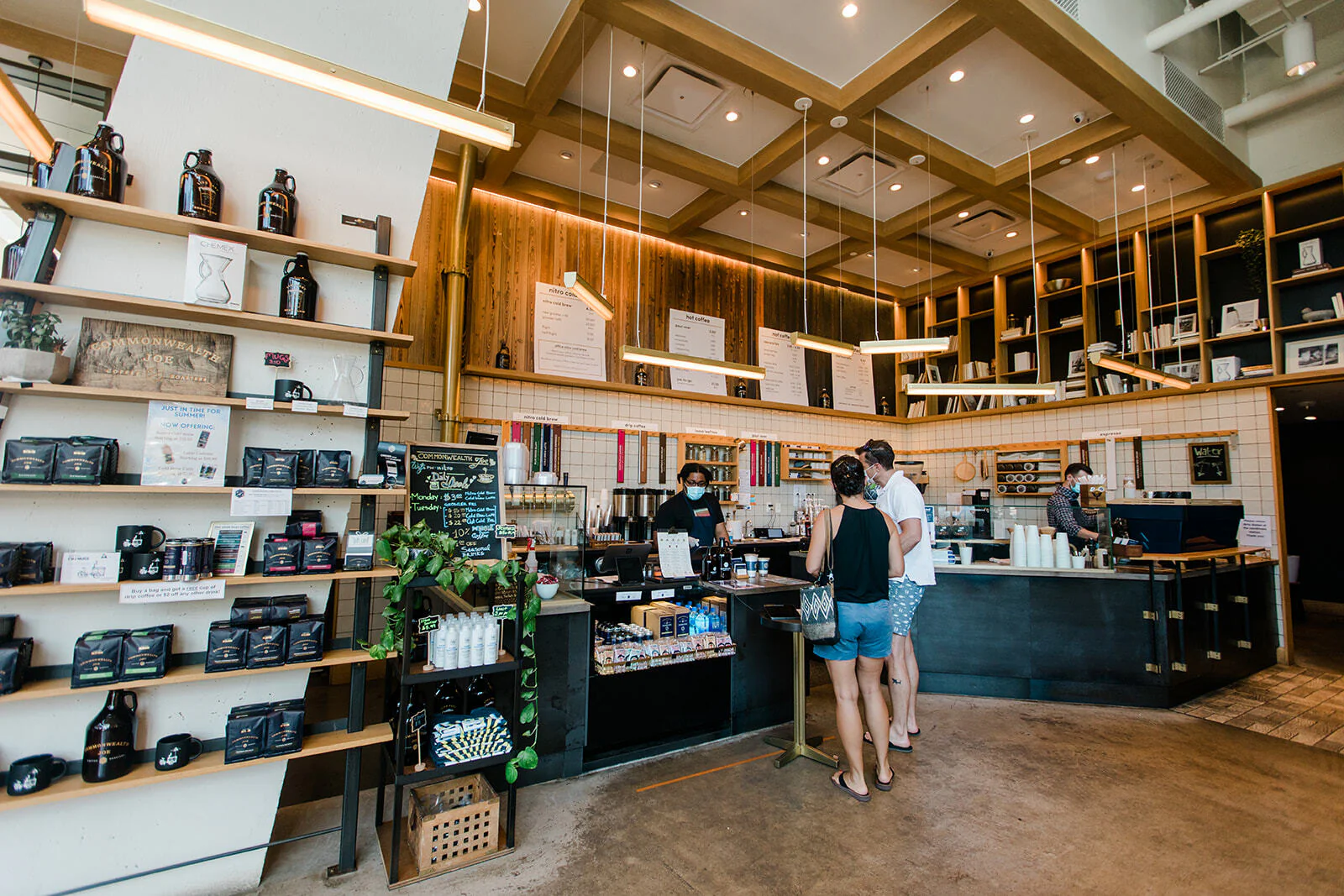
Researchers have spent decades studying how surroundings shape behavior. Coffee shops happen to combine several factors that the human brain responds to remarkably well: moderate background noise, comfortable lighting, familiar routines, mild social interaction, and sensory cues that signal safety rather than stress.
That's why people willingly spend $4–8 on a latte they could brew at home for less than a dollar.
Your Brain Likes "Busy, But Not Too Busy"
Absolute silence sounds productive. Reality says otherwise.
Many people discover this the hard way while working from home. A quiet room often makes every tiny distraction louder—a phone notification, a neighbor mowing the lawn, even your own thoughts.
Coffee shops occupy an interesting middle ground.
Behavioral researchers describe this as an environment with moderate ambient stimulation. One widely discussed study published in the Journal of Consumer Research found that moderate background noise—around 70 decibels, roughly comparable to a busy café—can improve creative thinking compared with complete silence or very loud environments.
Go much louder, however, around 85 decibels or more, and performance tends to decline because the brain begins allocating more attention to filtering sound instead of solving problems.
Anyone who's tried working beside a commercial espresso grinder during the morning rush has probably experienced that shift firsthand.
The Coffee Smell Does More Than Smell Nice
Fresh coffee triggers expectations long before caffeine enters the bloodstream.
Psychologists call this priming. Sensory experiences influence later thoughts and behaviors without us consciously noticing.
The aroma of roasted coffee beans has become strongly associated with productivity, conversation, studying, and relaxation because millions of people repeatedly experience those activities together.
Eventually, simply walking into a café begins activating those mental associations.
The effect isn't identical for everyone, but it's powerful enough that marketers routinely design retail spaces around scent. Hotels, clothing stores, and bakeries often use carefully selected fragrances because scent has unusually strong connections to memory through the brain's limbic system.
Coffee shops benefit almost accidentally.
There's Comfort in Being Alone Together
Look around any café.
Someone's reading.
Another person is typing furiously on a MacBook Air.
Two friends are laughing near the window.
Nobody expects you to interact.
That combination creates something sociologists sometimes describe as public solitude—being surrounded by people without the pressure to participate.
Humans evolved as social creatures. Complete isolation can subtly increase stress, while constant interaction becomes mentally exhausting. Coffee shops sit neatly between those extremes.
You aren't lonely.
You aren't trapped in conversation.
For many people, that's the sweet spot.
The "Third Place" Effect
Home serves one purpose.
Work serves another.
Coffee shops often become what urban sociologist Ray Oldenburg famously called a third place—a location outside home and work where community naturally develops.
Third places share several characteristics:
They're easy to access.
Regular visitors recognize each other.
Conversation happens naturally but isn't required.
People feel welcome regardless of status.
Think about independent neighborhood cafés where baristas remember regular customers' names or favorite drinks. Those tiny interactions matter more than they appear.
Research in environmental psychology consistently links familiar community spaces with improved feelings of belonging and lower perceived stress.
Predictable Routines Reduce Mental Load
Decision fatigue is real.
Every choice—what to wear, where to sit, what to eat—uses mental resources.
Coffee shops simplify surprisingly many decisions.
You order.
Find a familiar seat.
Open your laptop.
Begin working.
Repeat tomorrow.
The routine becomes automatic.
Neuroscientists studying habits explain that repeated behavioral sequences gradually require less conscious effort, allowing more mental energy for creative or analytical tasks.
That's partly why many writers deliberately visit the same café every week.
The location itself becomes a productivity cue.
Caffeine Helps...But It's Only Part of the Story
People often give caffeine all the credit.
Not quite.
Most healthy adults can safely consume up to 400 milligrams of caffeine per day, according to guidance from health authorities including the U.S. Food and Drug Administration (FDA). That's roughly equivalent to four or five standard cups of brewed coffee, although actual caffeine varies widely.
A typical range looks something like this:
Drink | Approximate Caffeine |
|---|---|
Espresso shot | 63–75 mg |
Brewed coffee (240 ml) | 95–120 mg |
Cold brew | 150–250 mg |
Decaf coffee | 2–15 mg |
Yet plenty of people remain productive in cafés while drinking herbal tea.
The environment contributes almost as much as the beverage.
Small Design Choices Shape Big Feelings
Walk into different coffee shops and notice what changes.
Lighting.
Music.
Furniture.
Distance between tables.
Window placement.
None of those decisions happen randomly.
Many successful cafés deliberately use warm color temperatures around 2700K–3000K because softer lighting feels calmer than bright office-style lighting above 5000K.
Background music usually stays between 60–70 decibels, allowing conversation without forcing people to raise their voices.
Tables often vary in size because customers behave differently depending on available space. Small round tables encourage shorter visits and conversation. Larger communal tables invite laptop work and collaboration.
Even Wi-Fi affects behavior.
Most cafés now provide dual-band or tri-band wireless networks supporting modern standards like Wi-Fi 6 (IEEE 802.11ax) or Wi-Fi 6E, although older customer devices may still connect over 2.4 GHz. Some locations intentionally limit session durations or bandwidth during busy periods to prevent a handful of remote workers from monopolizing seating all day.
Those policies occasionally frustrate freelancers, but they also keep tables turning over.
Why So Many People Work Better in Cafés
Remote work changed everything.
Instead of choosing only between home and the office, millions now rotate through libraries, coworking spaces, and cafés.
Video conferencing platforms such as Zoom, Microsoft Teams, and Google Meet made that flexibility possible, although coffee shop workers quickly learned another lesson: never assume the café's internet is stable.
A crowded morning can overwhelm public Wi-Fi.
Someone steaming milk beside your microphone can ruin an otherwise perfect client presentation.
Experienced remote workers adapt.
Download important files before arriving.
Keep a mobile hotspot available as a backup.
Little habits like those remove unnecessary friction.
Paying for Coffee Buys More Than Coffee
Consider a typical purchase.
Item | Common Price Range (US) |
|---|---|
Drip coffee | $2–4 |
Latte | $4–7 |
Specialty seasonal drink | $6–8 |
Pastry | $3–6 |
People sometimes question spending that much.
Yet many regular customers aren't paying solely for the drink.
They're paying for:
Reliable seating
Air conditioning or heating
Electrical outlets
Wi-Fi access
Ambient atmosphere
A temporary office
A mental reset
Viewed that way, the economics make more sense.
Coffee Shops Quietly Support Mental Well-Being
Nobody should think coffee shops replace professional mental health care.
Still, they can provide something surprisingly valuable.
Gentle structure.
Getting dressed, leaving home, ordering a drink, and sitting among other people introduces routine into days that might otherwise blur together.
Psychologists frequently emphasize the value of environmental change, especially for people working remotely or studying long hours. Simply changing physical surroundings can interrupt repetitive thinking patterns and restore attention.
Some days, that's enough to make difficult work feel manageable again.
The Rise of "Coffee Shop Culture"
Social media accelerated something that already existed.
Platforms like Instagram, TikTok, and YouTube turned aesthetically designed cafés into destinations rather than simple beverage stops.
Laptop-friendly seating.
Minimalist interiors.
Natural light for photography.
Seasonal drinks with distinctive presentation.
Those details attract visitors, but repeat customers usually stay for another reason.
The atmosphere works.
A beautifully designed café without comfortable seating or pleasant acoustics rarely becomes someone's weekly workspace.
Looks invite the first visit.
Psychology keeps people returning.
FAQs
Why do I concentrate better in a coffee shop than at home?
Moderate background noise, fewer household distractions, established routines, and mild social presence often improve focus. Many people also associate cafés with productive work, creating a psychological cue that helps them begin tasks more quickly.
Is working from a coffee shop actually more productive?
For many people, yes—but not universally. Tasks requiring deep concentration may benefit from quieter spaces, while creative work, writing, brainstorming, and email often fit naturally into café environments.
Does the smell of coffee really affect mood?
Research suggests scent strongly influences memory and emotional associations. While coffee aroma doesn't automatically improve performance, it can trigger positive expectations related to comfort, productivity, and routine.
Why do coffee shops feel relaxing even when they're busy?
They provide social connection without demanding interaction. Psychologists sometimes describe this balance as public solitude, where people feel surrounded by others while maintaining personal space.
Are independent cafés psychologically different from chain coffee shops?
Both can provide similar psychological benefits. Independent cafés often create stronger neighborhood identity and familiarity, while larger chains usually offer predictable layouts, menus, and environments that many customers find reassuring.
One More Cup, One Better Habit
The next time you settle into your favorite corner table, notice what actually keeps you there. It probably isn't the espresso alone. It's the lighting that doesn't strain your eyes, the steady murmur of conversations you aren't part of, the familiar routine of opening your notebook, and the quiet feeling that you're exactly where you need to be for the next hour.
If you're trying to build a healthier work or study habit, experiment with the environment before buying another productivity app. Sometimes changing your surroundings accomplishes more than changing your software.
coffee psychology
why people love cafes
cafe atmosphere science
coffee habits
emotional coffee culture
Found this helpful? Share it!